


How I Develop People
See Potential
I look beyond resumes and current skill sets to identify curiosity, character, and untapped capability.


Challenge Thinking
I intentionally move people beyond solving isolated problems toward understanding systems, strategy, and long-term impact.
Success isn't measured by retaining talent forever. It's measured by watching people grow into leaders capable of succeeding without me.
Create Leaders





Leadership Creates Ripples
Leadership is rarely defined by a single decision. More often, it is shaped by the thousands of small choices we make every day—what we prioritize, what we reward, what we tolerate, and how we invest in the people around us. I've always believed those decisions create ripples.
Like a stone cast into still water, every action extends far beyond the moment it occurs. A conversation can build confidence. A new opportunity can reveal untapped potential. A difficult decision can reshape the way a team approaches future challenges. What may seem like a small investment today often influences people, teams, and organizations in ways we may never fully see.
This is why I encourage those I lead to step back and look beyond the task immediately in front of them. Solving today's problem is important, but understanding how today's decision affects tomorrow's challenges is what separates effective execution from lasting leadership. Every process we design, every technology we implement, every strategy we pursue, and every person we develop becomes part of a much larger system. When we fail to recognize those connections, we optimize individual moments instead of strengthening the organization as a whole.
The same principle applies to people. When you believe in someone's potential before they believe in themselves, you create a ripple that extends well beyond your own influence. Confidence grows into ownership. Ownership develops into leadership. Leadership inspires others to do the same. Over time, those ripples become stronger teams, healthier cultures, and organizations capable of achieving far more than any single leader could accomplish alone.
Projects eventually conclude. Technologies evolve. Organizational charts change.
The impact we have on people endures.
That is the ripple I hope every decision creates.
Stories of Growth
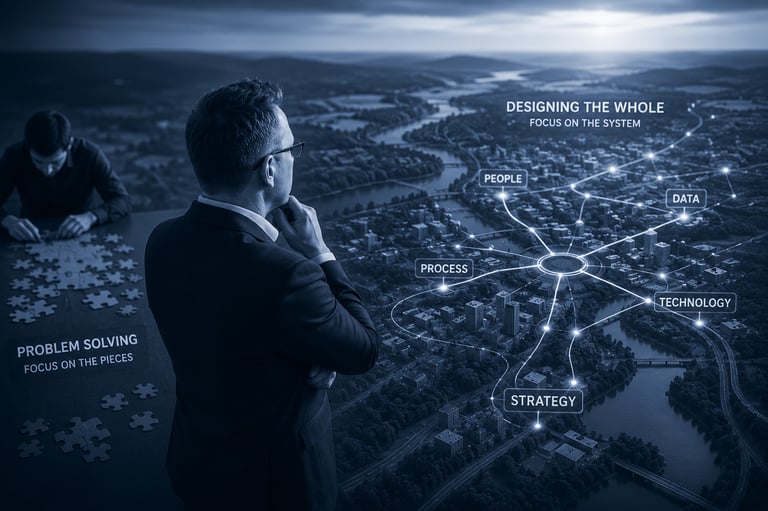
Seeing the Whole, Not Just the Pieces
One of the most meaningful leadership decisions I made was moving a talented software engineer into a senior data modeling role. It required a completely different way of thinking—shifting from solving individual technical problems to designing systems that could evolve and support the organization as a whole. The challenge pushed him to think more strategically and develop a broader perspective.
That new way of thinking became the foundation for his leadership journey. He eventually pursued a new opportunity and today serves as a Vice President. It reinforced a lesson I carry with me every day: sometimes the greatest opportunity a leader can provide isn't a promotion—it's a chance to think differently.


Betting on Potential
During one hiring process, nearly everyone agreed that a candidate lacked the technical experience needed to succeed. I saw something different. His curiosity, humility, and eagerness to learn convinced me that his potential mattered more than his résumé, so I chose to invest in who he could become rather than what he already knew.
That decision paid dividends. He became one of the strongest engineers on the team before moving on to a larger opportunity. Today he is a Senior Engineer, contributes to open-source software, publishes technical papers, and continues to grow as a leader in his field. It remains one of my strongest reminders that while skills can be taught, curiosity and character are what truly drive long-term success.